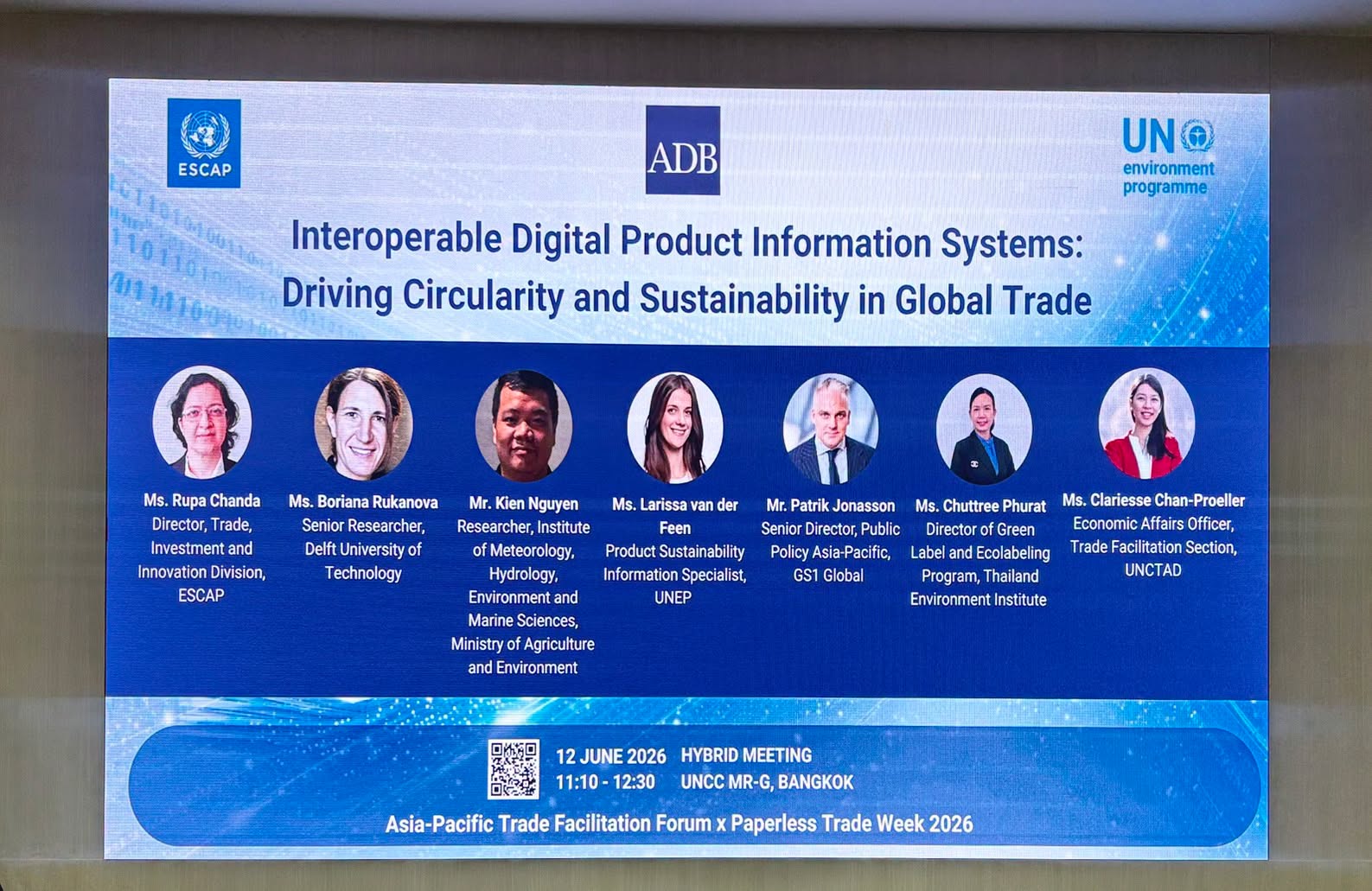
12 June 2026, MR-G, UNCC, Bangkok Dr.Chuttree Phurat is invited as panelist on Panel discussion the opportunities and challenges for integrating DPIS into trade systems, readiness gaps in getting started with Digital Product Information Systems (DPIS).
This event is part of the APTFF x PTW 2026, co-organized by the Asian Development Bank (ADB) and the United Nations Economic and Social Commission for Asia and the Pacific (ESCAP), in collaboration with the United Nations Environment Programme (UNEP)
Objective
- Increase awareness and understanding among stakeholders of the benefits of interoperable Digital Product Information Systems in supporting circular, sustainable trade
- Promote cooperation among countries to enhance interoperability of Digital Product Information Systems
- Gather participants’ perspectives and inputs to inform the development of practical guidelines for interoperable Digital Product Information Systems
Thailand Environment Institute (TEI) recognizes Digital Product Information Systems (DPIS) as a key enabler of sustainable consumption, circular economy development, and future-ready trade systems. By providing consumers, businesses, and regulators with access to reliable and standardized product information throughout a product’s lifecycle, DPIS can help create more transparent and sustainable markets.
To unlock the full potential of DPIS, collaboration among governments, businesses, standards organizations, and consumers will be essential. Priority actions include developing interoperable standards, establishing trusted data governance mechanisms, strengthening capacity building for SMEs, and promoting regional cooperation, particularly within ASEAN.
TEI believes that DPIS should be viewed not merely as a digital tool, but as foundational infrastructure for sustainable production, consumption, and trade. Through stronger data transparency, trusted information systems, and inclusive implementation, DPIS can help consumers make better choices, support businesses in meeting evolving market requirements, and accelerate the transition toward a more sustainable and circular economy.









Share: