
Thematic Areas: Climate Adaptation
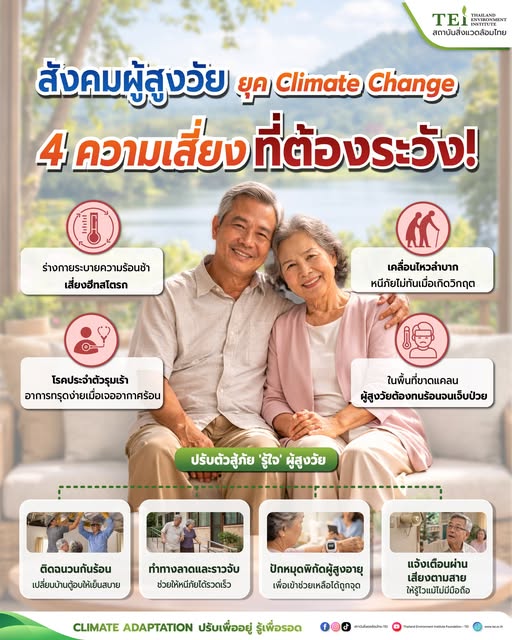
Decreased thermoregulation: The body's ability to cool down is reduced, making the elderly more susceptible to heat stroke and other heat-related health issues compared to other age groups.
Aggravated underlying conditions: Chronic diseases can become more severe when exposed to extreme heat or rapidly changing environments.
Mobility challenges: Difficulty in moving makes evacuation or self-assistance during disasters much harder, especially in remote areas or places with limited access to medical services.
Enduring heat to the point of illness: Living in poorly ventilated, stifling homes without access to cooling forces the elderly to endure extreme temperatures. This silently drives up illness and mortality rates from accumulated heat stress.
As the world faces Climate Change, extreme heat and erratic weather patterns are increasingly impacting people's health. This is especially true for the elderly, a highly vulnerable group that requires special care.
The Thailand Environment Institute (TEI) points out that preparing our aging society for the era of Climate Change requires shifting from short-term fixes to systemic planning. This should follow the "Adapt to Live, Learn to Survive" approach, which aligns with the National Adaptation Plan (NAP).
Install thermal insulation to keep homes cool and comfortable.
Build ramps to facilitate emergency evacuation.
Establish clear "elderly household coordinates" so that rescue efforts can be precisely targeted and immediate during a crisis.
Utilize community broadcast warning systems (PA systems) and dispatch volunteers to knock on doors to check on elderly individuals living alone.
TEI advocates for Climate Adaptation communication for the public good, alongside "designing a social structure" that effectively protects the elderly. We must ensure that no one is left behind to face severe heat and disasters alone. Because this is no longer just an option, it is our "way to survive." Let's adapt, change, and stay safe together.

Share: